Huichol Art (Wixarika)
04/01/2026
Huichol art, its meaning…
A ritual art.- Huichol art has its origins in ritual art, el cual se caracteriza por ser una práctica religiosa específica de una etnia, en la cual se define la identidad propia de la comunidad así como su cosmogonía.
This ancestral art arises from tradition, as a representation of the images visualized by the marakame, also known as shamans., these visions arise from the consumption of hikuri or peyote, which allows them to travel through the threshold of an unknown universe and thus be able to establish a direct relationship with the divine.
Huichol art has a hypnotic beauty that is not only made up of myths drawn on yarn or thread, but also each artistic creation has a great cosmogonic dimension that reveals part of its spiritual richness.
An art linked to experiences linked to peyote or hikuri
This ritual art is one of the few types of art where each piece created is strongly linked to a mystical meaning.The spirit is seen as raw material in this type of art and vice versa.
Each piece of art elaborated by these artisans and artists is based on their experiences. associated with the consumption of peyote or hikuri, since it is from this interaction that the figures and the great coloring characteristic of this beautiful art emerge.
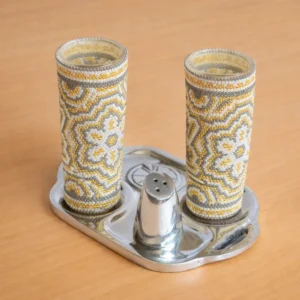
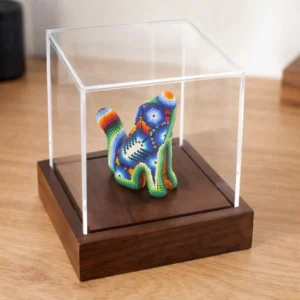
"The techniques used in Huichol art are the application by hand of chaquira stones, which are placed one by one on the piece to be decorated, and the stamen, with which they are placed on the piece to be decorated. create multicolored drawings that represent their symbology and cosmovision, that is, their way of seeing life."

What does the word Huichol mean?
The name Huichol is derived from the Wixárika word, which means "soothsayer or shaman". or "deep-hearted person who loves knowledge", the Huichol language belongs to the Uto-Aztecan language family. It is important to note that the "Huicholes" prefer to be called Wirrárika or Wixárika and in plural Wixaritari.
Who are the Huichols? Origin Wixárika.- The Huicholes are a very special ethnic group in our country.The members of the community have been in charge of keeping their culture and traditions alive through the passing of time.
Its exact origin has not yet been corroborated.The Huichol are believed to be descended from different ethnic groups that were once settled in the Sierra Madre Occidental.

Where is the Huichol community located?
The Huichols inhabit the central east of Mexico., are settled in the "Sierra Wixárika", mainly in the mountainous region of Nayarit and in the highlands of Jalisco.
Religious objects used by the Huichols
Some pieces made by our Huichol artisans have been considered as pieces of admiration. Many of these pieces that represent religious symbolism such as:
The muvieris, some small arrows made of bamboo that incorporate feathers at one end.
Niérika It is created based on circular fabrics of yarn with many colors with a hole in the center, sometimes it can have a mirror covering the hole.
The tacuats Also known as backpacks, they are embroidered and sometimes also have beads attached to them. They are very functional objects where shamans treasure their sacred symbols.
The uweni which is a type of dwarf chair that is only used for ritual use.
Finally there is the Tepo, which is a type of drum made from the trunk of the oak tree.
Cultural history, heritage and legacy
La etnia wixárika es una de las etnias que más ha logrado mantener sus tradiciones y su cultura de forma casi intacta con el paso del tiempo, transmitiéndose de generación en generación a través de los siglos.
Con la conquista, los huicholes tuvieron que huir a la Sierra para tratar de no ser encontrados por las tropas de los españoles, pero algunos de ellos no lograron huir a tiempo y fueron tomados por los monjes franciscanos para posteriormente ser convertidos al cristianismo.
There is evidence of some documents that mention how the Huichols occupied the Jalisco region, the stories of Alonso Ponce dating from 1587, They tell about an ethnic group that united with an ethnic group called guachichiles to carry out incursions in the settlements and in the caravans coming from the Spaniards, it is believed that the ethnic group to which he was referring was that of the Huichols.
Huichol symbols stories and experiences told
Huichol crafts are full of symbolism and are deeply religious, their two main forms of expression are through figures or objects made with beads and wax, as well as yarn paintings, in these pieces of art they manage to capture their vision of the world and the cosmos, myths, legends, the history of creation and other visions that occur in peyote rituals.
Huichol handicrafts, beads and yarn as a brush
The beads are placed by hand one by one, very meticulously on top of a surface waxed with Campeche wax, to create beautiful pieces full of textures and great color.
The famous tables of yarn
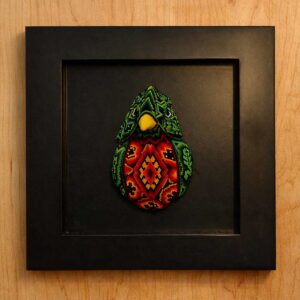
The famous tables made of worsted thread are the result of nierika, or the so-called “gift of seeing”. These types of paintings are created on wooden boards also covered with wax, and in which complex designs with a great symbolic charge are made.
Huichol art with figures
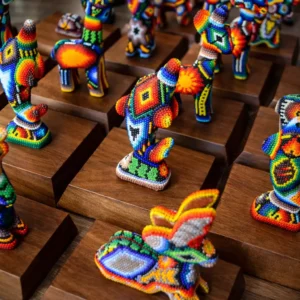
Among the main drawings represented in these pieces you can find the three most important elements of his cosmogony, which are the deer, the peyote, the corn and the eye of God, the fire, the man with deer horns or fire feathers, the lizard and the eagle.
The nierika, energy, mirrors and cosmological beliefs
As for their religion, for them the "nierika" includes everything that exists, a través de los iniciados y a su gran esfuerzo por obtener “el don de ver”. Las famosas tablas de estambre de Nierika son obra de artesanos, quienes han dejado una gran parte de su búsqueda personal en cada pieza de arte que elaboran.
For them the world is made up of three universes.:
El primero sería el de la mitología, which states that the origin of life arose in the oceans.
El segundo se refiere al maíz, which is surrounded by traditions and daily life.
The third and no less important would be the Huichol art, where each elaborated piece marks its identity as a unique and special ethnic group.
For them it was in Wirikuta where the "creation" aroseThat is why this is a sacred place in which they make pilgrimages to recreate the route that their ancestors did.
In this desert of San Luis Potosí it is where peyote grows and abounds, cacti that they eat in rituals to communicate with the gods and to receive the 'gift of seeing'.
You can see some works and if you want to know all his work we invite you to visit our section Huichol art