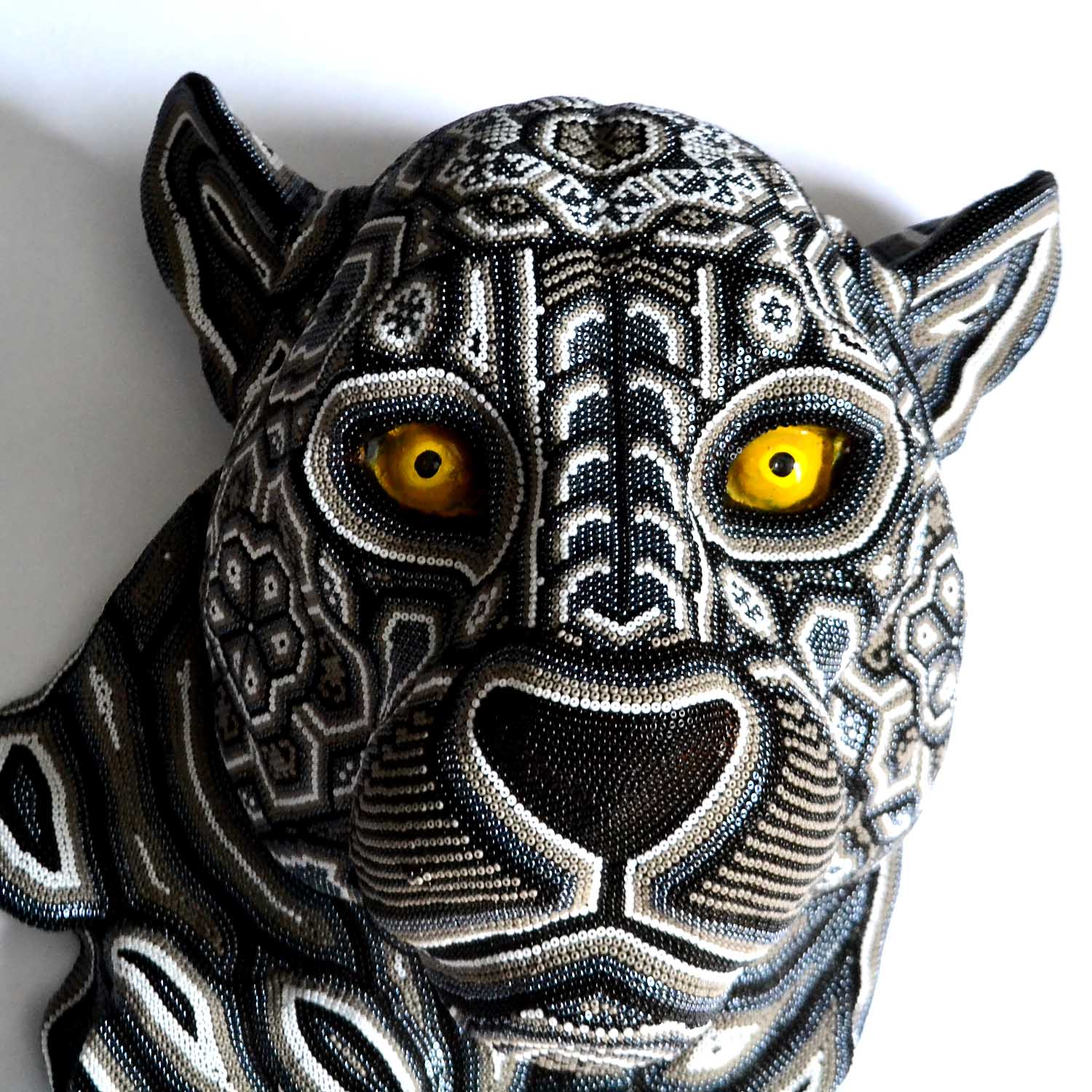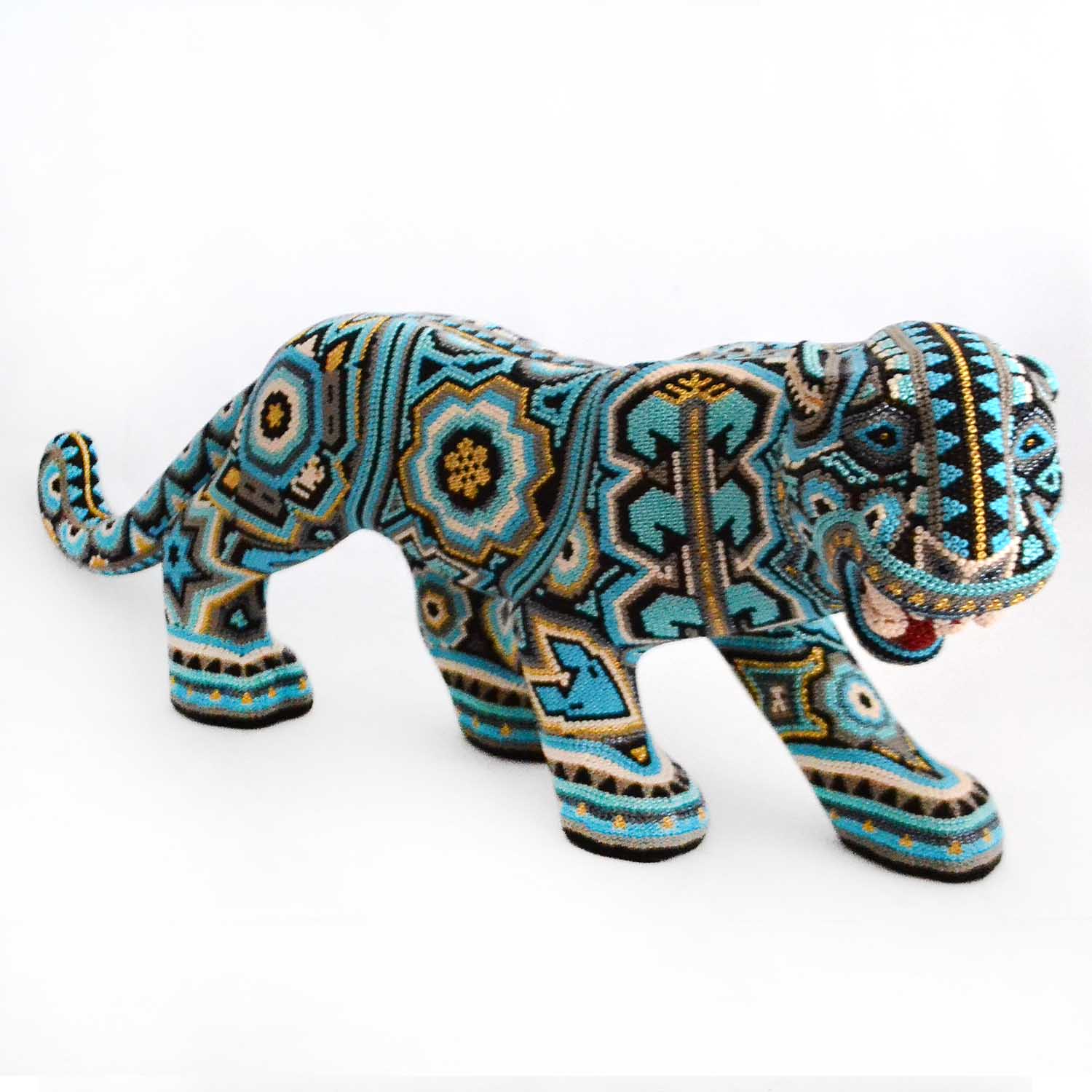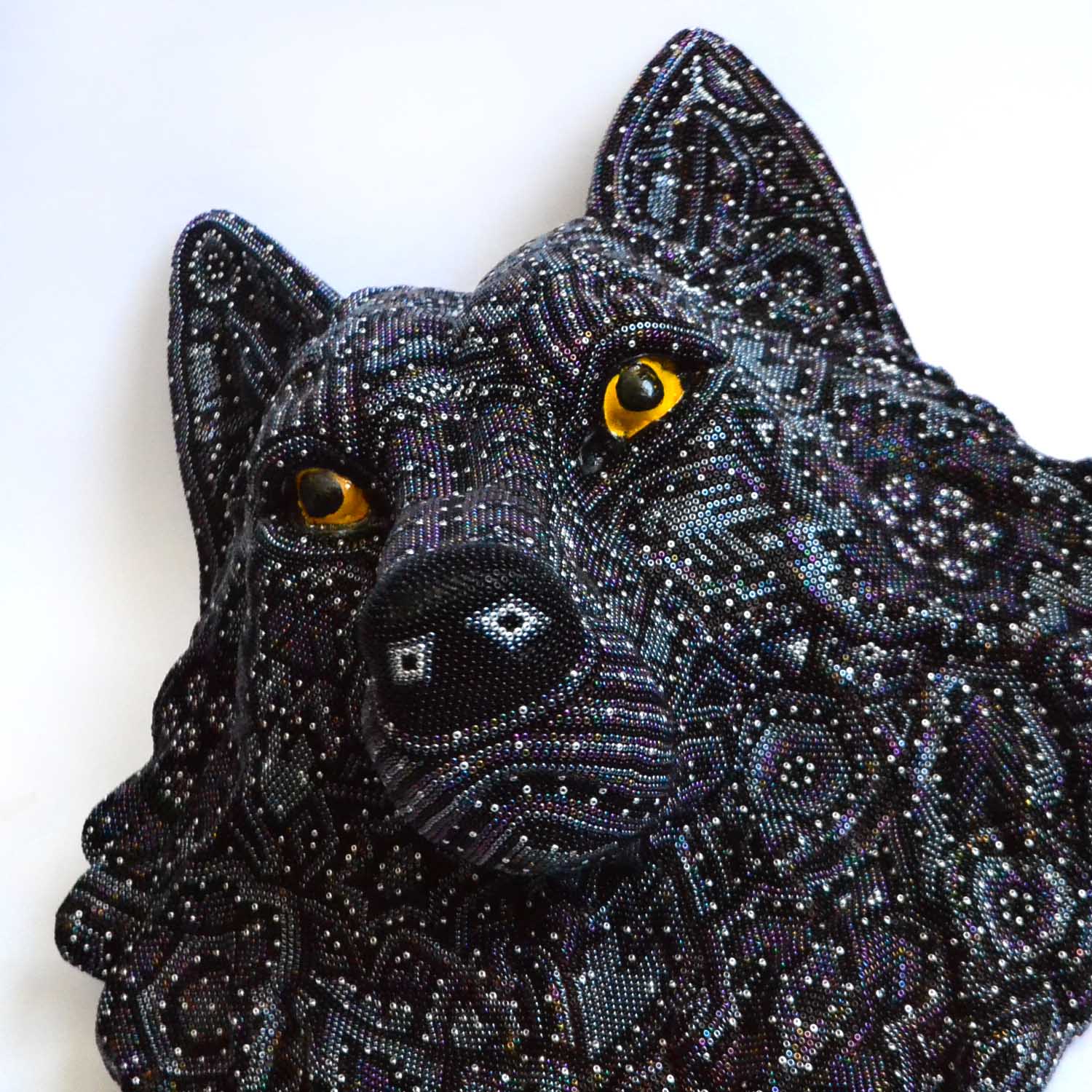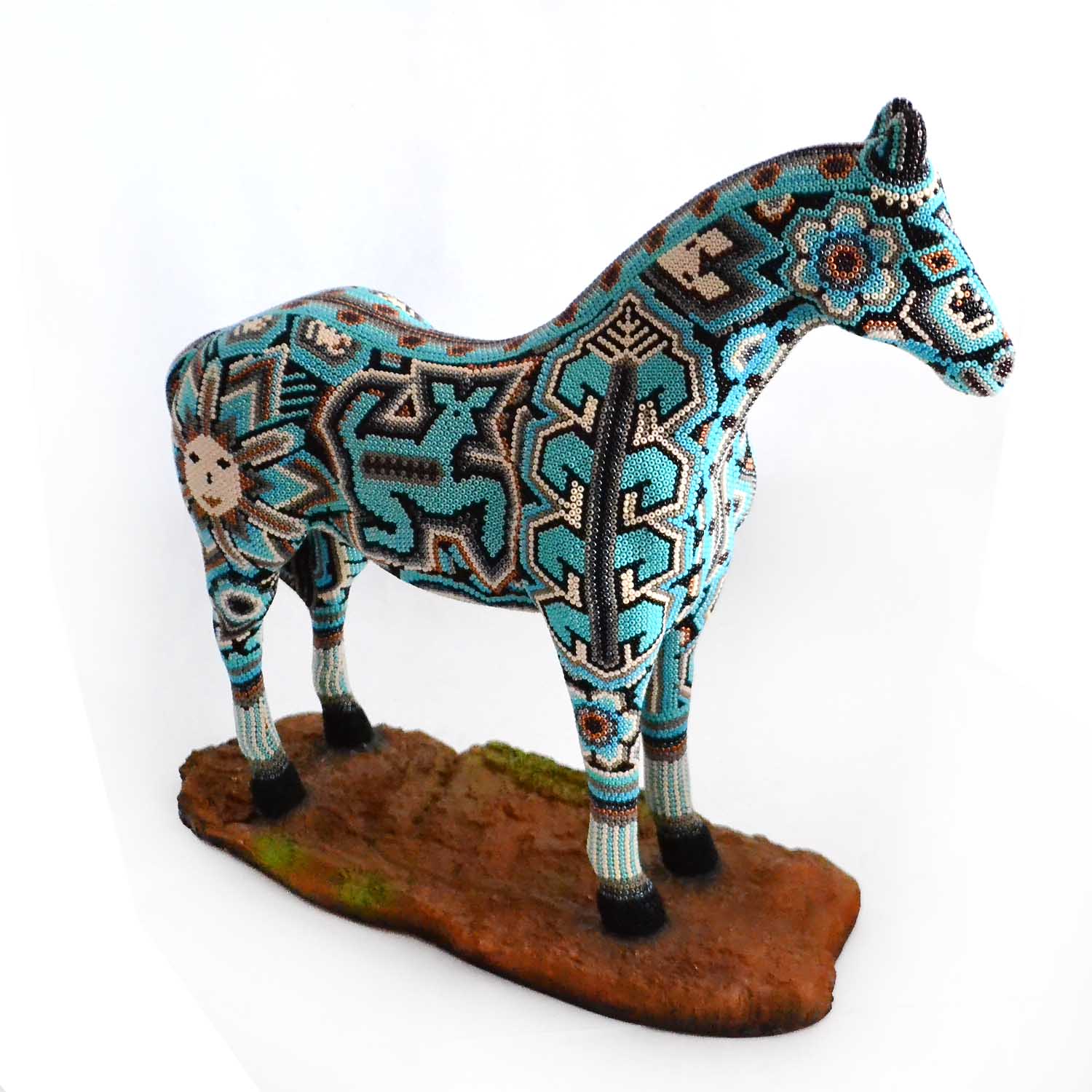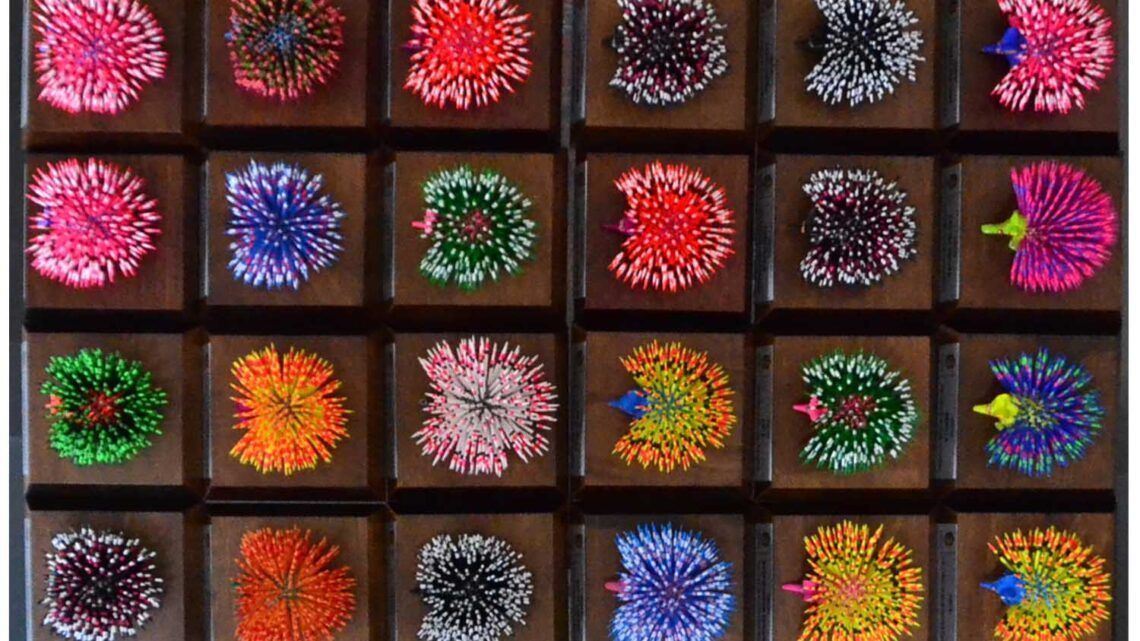
Mexican art is expressed in various forms and among them, handicrafts distinguish our country as one of the largest producers worldwide. The most representative handicrafts of Mexico are in this list with the main techniques that have been evolving and perfecting over generations; artisans who create exceptional pieces unique in its kind and with a high quality. Get to know them and delight yourself with them.
Huichol art
Huichol art is a grouping of traditional and contemporary styles. Novelties in the folk arts. The artists of this style are the Huichol people who live in the western Sierra Madre in Jalisco, Nayarit and Durango.
Furthermore, Huichol art is a style that can be seen in various objects and paintings decorated with beads (small glass beads), yarn, and other materials. Today, the materials used in this art form have changed, and the designs have gradually evolved, although some symbols remain important due to their significance.
Who are the Huicholes?
We can say that the Huicholes are and were indigenous, the great part of them inhabit in mountainous places, these places are in the north of Jalisco and a great part of Nayarit, the center of Mexico. Today it is considered that there are 50,000 in these areas. The Huicholes are one of the ethnic groups that have managed to remain "pure" since the time of the Spanish conquest. The origin of Huichol art lies in an ancestral tradition, where the physical transcription of the images visualized by the Huichol shamans is passed from one generation to another.
When the Spanish invaded their territories, the Huichol people fled to the remote mountains to preserve their autonomy. This independence allowed them to forge a culture with unique traditions and aesthetics. Their yarn paintings, beads, bags, clothing, and other items have been very well received in both the Mexican and international markets.
The Huichol religion is based on beliefs, ceremonies and myths, as well as a trinity.The ritual is based on the veneration of peyote, deer and corn. These things have a great importance apart from the representations of the gods that make them stylistically.
Huichol art has its beginnings in ritual art: belongs to a specific religious practice of an indigenous group, making Huichol art have different dimensions than the contemporary art we usually find in museums and galleries.
The Huichol world is divided into three universes: that of mythology, maintaining that life began in the ocean; the one referring to the corn, where daily life and Huichol traditions are developed and the one that has to do with the mysticism, which reveals the Huichol world and the Huichol art of their rituals that distinguish them and give them identity as a Huichol community.
Types of Huichol Art
A type of artistic expression of the Huichol art are the worsted squareswhich are made on wooden boards with wax, or the pieces which are worked by forming figures with chaquira on bules, violins, turtles, etcetera. These handicrafts can be classified into two types: those made for commercial purposes and those that reflect religious experiences.
Another expression is the works that are made with beads or thread (yarn), each one carries symbolic motifs, stories of the Huichol culture and Huichol legends of their cosmogony that offer us an overview of Huichol society.
They also use the techniques with beads and pictures that were the highlight of this style of art.. These materials are a replacement of the traditional materials used in ancient times such as stone, vegetable dyes or even clay.
The production and decoration of works of art with beads or beads did not begin with the entry of glass beads from Europe, which was what happened with thousands of indigenous cultures, but rather these beads have been used for centuries in the Huichol culture in which stones, turquoise, clay, bones, jades, seeds, etc. were used.among other things.
This art gradually became popular thanks to the thread paintings that were quickly imitated. However, the designs that these paintings depicted were difficult to imitate and many of the Huichol artists took weeks to finish a single design.
Outstanding Mexican Handicrafts - Discover the Art and Culture of Mexico through their works. Authentic handmade works by Mexican artists; magic and color in every detail that they give us in the decoration of their pieces.
Wooden Alebrijes (Oaxaca)
The alebrijes of Oaxaca are wonderfully strange and curious figures, born from the imagination of the artisans of Arrazola and neighboring towns. These Oaxacan wood carvings are first carved and then covered with a base coat before being decorated with other colors.
The place of the wooden alebrijes
Then, in another geography, figures touched by artisan creativity were also adopted. Where? In San Martin Tilcajete, a Zapotec town in the Central Valleys. Its name means "place where they paint". There, as in San Antonio Arrazola, live numerous families who for generations have dedicated themselves to the art of making alebrijes.
Some Alebrijes are decorated with small dots for which the artisans use hypodermic needles to apply the paint. Although Arrazola is famous for creating alebrijes they are for sale everywhere in central Oaxaca and some are also available for purchase in the coastal towns, so a trip to the village is not essential if you want to buy some of this strange art without taking half a day out of your trip to visit the town.
The meaning of wooden alebrijes
For the Zapotec, every human being comes into the world accompanied by an animal, a protective spirit that links him or her to the sacred. They call him nahual. We must thank the artisans for having learned to represent him.
Wood
It is soft and light, that of the copal, the sacred tree of the Zapotecs. Once the pieces are carved, they are soaked in gasoline to keep termites away.
Pigments
They are natural. The shell of the male copal is toasted in the sun to make it powder, then lemon juice is added to make it yellow, honey to make it shine, from the lime comes the black and with the baking soda the red.
The details
Pomegranate, indigo, huitlacoche or nochebuena serve as colorants. Then the imagination of each artisan appears when painting. This piece is also inlaid with thread, fabric and paper. The large pieces are made from a single piece of female copal.
The weather
Molding the wood, letting it dry and painting it with great care can take from a month to years. It all depends on the size of the piece.
Alebrijes are one of the best known Mexican handicrafts. These figures are made of copal wood, are removable and are painted in bright colors representing animals or unreal beings according to the imagination of the artisans. Being a 100% handmade product, there may be small differences with the image. Assorted colors.
Trees of Life in Polychrome Clay
The ceramics is probably the best-known of the popular arts of Mexicoand one of the oldest. Pottery is found in all regions of the country, in different forms and styles. Mexican pottery was traditionally handmade, using coils or molds. Called loza de barro, this clay was fired at a low temperature.
Sometimes villages specialize in a certain type of pottery. In many areas of the country, women make common pottery, and men make decorative pottery; in others, the whole family works together to make a certain type of pottery.
Pottery, like all other Mexican crafts, has changed over the last 100 years. Traditional earthenware is still made, but usually only for sale.
The elaboration of ceramic trees of life started approximately 100 years ago in Metepecstate of Mexico. Based on the original biblical trees that explain the origins of life (the story of Adam and Eve), these can include biographical scenes and historical passages and should be "read" from the bottom up. They can be painted with aniline, acrylic or enamel paints. They are also available unpainted, showing the natural color of the clay.
They are made in a "naif" style, with a great sense of humor and using all kinds of elements, such as flowers, fruits, people, animals, suns, moons, calacas (skeletons) and a long etcetera. The pieces are joined to the main body by means of wire threads. They come in all kinds of sizes and prices, the only limit being the artisan's creative ability.
Teotitlan del Valle wool rugs
The wool rugs of Teotitlán del Valle are recognized for hand-woven weaving on treadle loom. 100% wool woven by hand. The yarns used in the weaving are also made by hand on a spinning wheel with natural wool fibers, the wool is pre-washed to remove all grease with a natural detergent (amole-a root that when grated produces a cleansing foam for the wool).
The wool then undergoes a carding process to remove impurities (field debris that sticks to the sheep as they graze). In this process, the wool is combed until it is soft and ready to be spun into yarn. The raw yarns in their natural colors are white, black, light gray, and dark gray. Dyeing to obtain different shades is done with natural pigments. We use cochineal for red, orange, or maroon. This pigment changes hue depending on the fixative used. For blues, we use indigo; for deep black, mesquite; walnut for brown tones; and mosses collected from the mountains and marigolds provide yellow tones.
Once dyed, the fibers are washed again to ensure that the color has been properly set. Each color takes about a week to be ready. When the colors are ready we create a design and start to tension the warp on the loom.
If the design is geometric it is necessary to draw it on a checkered paper in order to have a scale and if the design is a literal drawing it is necessary to make the drawing on paper in the real desired size. It is possible to reproduce paintings (paintings of painters) on the fabric, these are the most laborious works. As for the finish, it depends on the customer, there are some who like it with bangs and others without bangs.
Mexican gifts: For individual purchase and immediate delivery enter here
✨ "Pride of Mexico - Immediate Delivery" Collection« 🌟
Support artisan talent and connect with the essence of Mexican art!