Origin of wooden alebrijes - Oaxaca
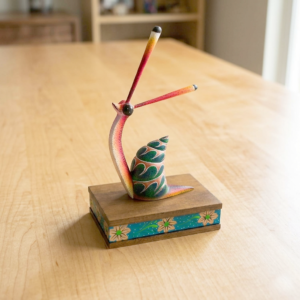
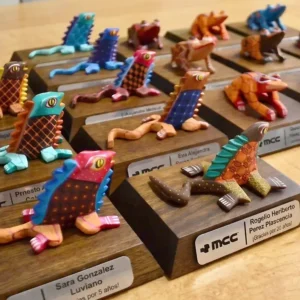
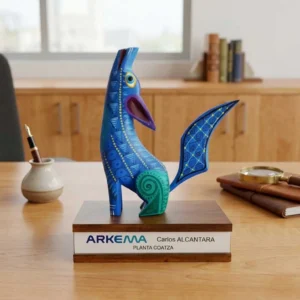
There are figures of a very diverse fauna and fantastic beings of external influences, from monsters, pegasus or Martians to nahuales, expressions typical of the worldview of the original groups of Oaxaca.
More than craftsmanship, some consider these pieces to be true works of art. The knowledge for the elaboration of wood carvings is a process that is acquired from generation to generation. The inhabitants of Tilcajete are born and grow up closely linked to the elaboration of figures as part of the family environment; they live among the piles of copal trunks, with the tools, the painting or the process itself: the carving, the painting and the exhibition of pieces for commercialization in their homes. Thus, children and young people are learning this trade from the older ones.
Some artisans say traditionalists for belonging to a culture that keeps everything inherited from their ancestors. The grandparents made the pieces for family domestic use; in the past few were prepared and it is said that they were objects for play or utilitarian: toys for children, spoons, resting benches, yuntas, carts, nativity scenes, saints, little angels and animals of the region, cats, dogs, donkeys or horses, although elephants, lions or giraffes were also made. In the same way, tiger masks were made to sell or masks of characters for the carnival. Among others, the following were used tzompantle poleIt seems that this wood no longer exists in the region. Before, they elaborated the pieces in white, it was only the carved wood without painting; the old ones comment that they made them to the natural one, rustic, but with the elapse of the time they began to paint them with the tizne of the pots and of the camal, with what they gave them "color". Soon after they began to paint them with aniline.
Currently, the elaboration of these crafts is the basis of the economy in Tilcajete. In some houses everyone works in the process of carving, painting and commercialization. In the 80's, the promotion of Oaxaca's handicrafts made possible the promotion of Tilcajete's carvings, which increased sales and the development of talents. This boom also arose from the work of families who, perhaps in a visionary way, foresaw a good income from the taste and demand for their wooden figures in the market. local and international tourism market.
During that decade, the economy of the town began its transformation, as agricultural activities gradually decreased and migration contracted. better quality of life thanks to the progress of the family economy due to the production of handicrafts. Between 1985 and 1989 there was a decline in trade. It is likely that demand decreased due to the saturation of these figures in the market; also, the repetition in the forms or the lack of innovation had an impact on the fall. Later, in the 1990s, there was a new boom and since then more families have dedicated themselves to this work.
According to Florencio Fuentes, a local artisan, the figures are sent to La Paz, Nuevo Laredo, Cancun, Cozumel, Queretaro and Puerto Escondido, among other destinations; they also come from San Francisco, California, Miami and even Germany. The main orders come from abroad, but there are also important domestic orders, which are dedicated to supplying other states. The price is based on the quality of the work.The size is also determined by the size, but what can considerably increase the cost is the originality, which is more on the artistic level than on the artisan level. Some have become famous for their creativity, such as the Blas family. Due to the price, those who buy them more are foreigners. In Tilcajete there is no organization of artisans, each one works independently, although most are dedicated to this.
Copal. Nowadays, vinyl paint is used, which allows the elaboration of finer and more colorful works, besides being able to clean the figure better, unlike aniline, with which, if a wet cloth is used, the color gradually disappears. To make the first shapes, the macheteThe knife to continue carving what they call rustic shapes, and finally the blade to give the fine finish. Copal is the wood used, at the same time resistant and not very hard. Before, the artisans went to the nearby hills to cut the wood, only the necessary for the work, but due to the high production of this craft, the copal of the region was diminishing until it was almost extinct, which forced the creators to bring it from farther and farther away. For this reason, there are individuals dedicated to the exploitation and transportation of the wood. The copal trees are small and grow like chaparrones, so it is not possible to extract a large amount of wood from them, which forces them to make the most of each trunk and each branch.
Currently, copal is brought from different regions of Oaxaca, from the Huatulco canyon and from the Valleys, and although there are different qualities -some are softer, others harder, some brittle and others with too many knots-, the artisans prefer the wood from the region itself. For this reason, and to improve the quality of the wood, as well as to reduce costs, several hectares have been planted on land belonging to the population. Copal has always been used for these figures, because it is a wood that grows well in the hills; the tree sticks easily, does not require much water or great care, although it is necessary to work every week and the planting must be protected from looting or possible fires. Copal is cut between six and seven years of age..
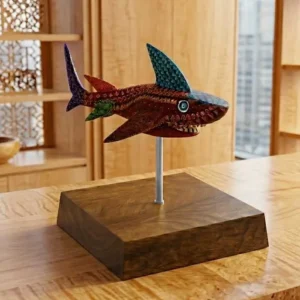
Figures.- In the past, they were produced only animalsbut then they changed. The young people began to work with other figures, contributing new ideas. Before, no dragons were made; then they began to make monsters, then followed the little martian and from there what the inventive craftsmanship and the acceptance of the buyers demanded. With the increase in exports, buyers are asking for more creative figures, not so repetitive. In spite of this, pieces are made that look like manufactures because of their similarity, although although the figures may be similar in shape and proportions, in general the painting makes them different. Some shapes are repeated, hence they are considered the most commercial, such as dogs, armadillos or iguanas, but the figures not only represent the local fauna, including domestic animals, but also those of the local fable. Since the 80's, artisans began to elaborate different figures: giraffes, dogs, cats, elephants, zebras, deer and all kinds of animals, including dolphins, sharks and other fish.. Then came the carving of fantastic figures, dragons and little martians. From then on, confusion arose.
In the past, they were not called alebrijesonly carved figures. The term alebrije has its origin in the Linares family, very famous for its fantastic pieces made of cardboard; Pedro Linares, a very talented person, gave it the name of alebrije inspired by dreams. They say in Tilcajete that a person noticed how this type of work was selling well and that it was enjoying a certain popularity; then he thought of making them in wood, because cardboard has the disadvantage of easy deterioration and undoubtedly in wood they would last longer. Since then they kept that name and over time they not only made these figures, but animals with many imaginary elements. Finally, there is another version in Arrazola, a town where this type of handicraft is also made. It is said that at the beginning of the 80's Pedro Linares visited with some relatives and showed them some of his alebrijes, and Manuel Jiménez decided to make fantastic beings, typical of his cosmovision, but carved in wood and with the style of the local craftsmanship.
✨ Discover our «Tayaupa – Alebrijes» collection» 🌟
Support artisan talent and connect with the essence of the Mixtec people of Oaxaca!